-yjdy__Gz.jpeg)
Understanding Zero-Click Searches: The New Search Reality
The digital marketing landscape is in constant flux, but few shifts have been as profound as the rise of zero-click searches.
As Dr.
Amit Kumar Das, a professional in the AI SaaS domain, frequently observes, this phenomenon fundamentally redefines how users interact with search engines and, consequently, how brands must approach their online visibility.
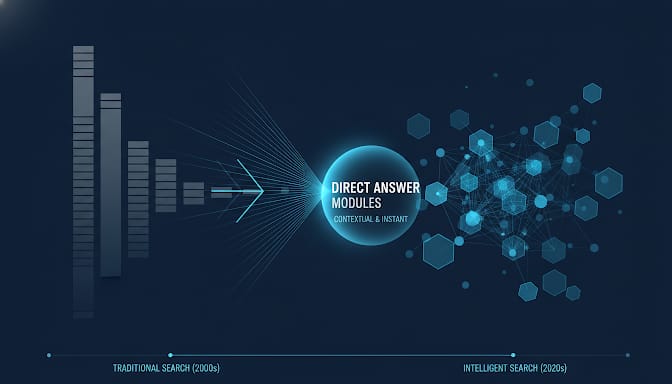
A zero-click search occurs when a user inputs a query into a search engine, and all necessary information is obtained directly from the search engine results page (SERP) without the user needing to click through to an external website.
This outcome is increasingly common due to the prominence of featured snippets, direct answers, and the expanding role of AI Overviews within search results.
The scale of this shift is staggering.
Recent data highlights that more than 65% of all Google searches conclude without a single click to a website.
Specifically, research indicates that approximately 58.5% of Google searches in the US and 59.7% in the EU end without a click.
This means that for every 1,000 Google searches in the US, only about 360 ultimately lead to a visit to a website not owned by Google or paid for via Google Ads.
As one source starkly puts it, "More than 50% of all Google searches end without a click to a website ' this is the new reality of search".
This trend is not merely a statistical anomaly but a direct consequence of evolving user behavior and advancements in search technology.
Users increasingly seek immediate gratification, preferring to find answers directly on the SERP rather than navigating through websites, dealing with cookie consents, ads, or potential paywalls.
The introduction and expansion of Google AI Overviews, alongside other search-enabled AI tools, have significantly accelerated this paradigm.
For marketing professionals, this necessitates a fundamental rethinking of traditional SEO strategies, moving beyond mere click-through rates to focus on broader brand visibility and keyword authority.
To thrive in this new environment, brands and agencies must leverage advanced tools that offer predictive decision support.
This involves understanding not just what users search for, but how they consume information directly on the SERP.
An effective marketing intelligence platform can provide the Marketing 4Sight needed to adapt to these changes, ensuring content is optimized for direct answers and AI indexing, even if it doesn't always generate a direct click.
This proactive approach to SEO, often termed predictive SEO, is crucial for maintaining relevance and influence in a zero-click world.
-CNGhNgQQ.jpeg)
The Impact of Zero-Click on Organic Traffic
The proliferation of zero-click searches fundamentally reshapes the landscape of organic traffic, challenging traditional SEO metrics and strategies.
Historically, SEO success was often measured by click-through rates (CTR) and the volume of traffic directed to a website.
However, the rise of advanced SERP features like knowledge panels, featured snippets, and AI Overviews means that users increasingly find answers directly on the search results page without needing to click through to an external site.
This structural shift indicates that search is becoming more of a destination in itself.
The data underscores this profound impact.
Google increasingly provides direct answers on the search engine results page, leading to a significant portion of searches ending without a click.
Studies have shown that the majority of searches now conclude without a click, with Google searches ending without a click being a notable statistic.
This trend is exacerbated by the advent of AI Overviews and new AI search engines such as ChatGPT Search and Perplexity, which are expected to further reduce click-through rates.
For marketing professionals, this means a direct impact on the volume of organic traffic reaching their websites, necessitating a re-evaluation of what constitutes successful online visibility.
In this evolving environment, the focus shifts from merely generating clicks to establishing keyword authority and ensuring brand visibility, even in a zero-click scenario.
Dr.
Amit Kumar Das, from an AI SaaS company, emphasizes that brands and agencies must leverage advanced tools for predictive SEO to anticipate user intent and how search engines will present information.
This approach is no longer about just ranking high, but about becoming the trusted source that search engines choose to feature directly on the SERP.
Implementing a robust marketing intelligence platform becomes crucial for analyzing these complex shifts, offering predictive decision support that guides strategy beyond traditional traffic metrics towards a more holistic understanding of user engagement and brand presence within the search ecosystem.
This enables an AI-assisted marketing strategy that can adapt quickly to the dynamic nature of search, ensuring visibility and influence even when clicks are not the primary outcome.

Optimizing for Featured Snippets and Direct Answers
The shift towards zero-click searches has placed a premium on optimizing for direct answers, particularly through featured snippets.
These prominent answer boxes appear at the top of Google's search results, providing users with immediate information without requiring a click,.
Examples range from simple queries like "weather tomorrow" to "how many grams in a cup," where the answer is presented directly on the SERP.
Given that nearly 60% of Google searches now conclude without a click, mastering this optimization is crucial for maintaining digital visibility.
To effectively optimize for featured snippets, content strategies must evolve to directly answer common user questions concisely and authoritatively.
This involves structuring content with clear headings, using question-and-answer formats, and providing definitive statements that Google can easily extract.
An effective 'Predictive SEO' approach, understanding not just current search queries but anticipating future user intent, becomes paramount.
Our AI SaaS company, for instance, focuses on providing 'AI-Assisted Marketing' tools that can analyze vast datasets to identify high-potential snippet opportunities and the precise language required to capture them.
Furthermore, building 'Keyword Authority' around specific topics signals to search engines that your content is a reliable source for direct answers.
This isn't merely about including keywords; it's about comprehensive, well-structured content that covers a topic thoroughly and accurately.
Dr.
Amit Kumar Das emphasizes that leveraging a robust 'Marketing Intelligence Platform' can offer the 'Predictive Decision Support' needed to pinpoint exactly which questions your target audience is asking and how best to frame your answers for snippet eligibility.
By focusing on clarity, conciseness, and structured data, brands can significantly enhance their chances of securing these valuable direct answer positions, effectively navigating the zero-click landscape.
Voice Search and AI: Driving Zero-Click Evolution
The rise of zero-click searches is inextricably linked to the advancements in Artificial Intelligence (AI) and the proliferation of voice search technologies.
Search engines are increasingly leveraging AI to generate summarized answers directly within Search Engine Results Pages (SERPs).
This sophisticated use of AI reduces the necessity for users to click through to external websites, as immediate answers are provided via AI-powered features, rich snippets, and knowledge panels that satisfy user queries instantly.
Voice assistants, such as Google Assistant and Gemini, further accelerate this trend by thriving on the ability to quickly deliver concise, single-answer results,.
For businesses aiming to maintain visibility, optimizing for these scenarios is crucial for voice search SEO.
Google's AI Overviews, for instance, now appear in over 50% of all search results, representing one of the fastest SERP feature rollouts in the company's history.
In business and technology sectors, AI Overviews are present in nearly 19% of searches, with projections indicating that over 70% of searches will be zero-click by 2025.
This evolution demands a shift in SEO strategy towards what Dr.
Amit Kumar Das, an expert in the AI SaaS domain, refers to as a more predictive SEO approach.
Search engines now reward content that is optimized for Answer Engine Optimization (AEO), Generative Engine Optimization (GEO), and AI Overviews,.
For marketing professionals, adapting to this landscape means embracing AI-Assisted Marketing tools that can analyze these trends and inform content creation.
Businesses need to ensure their content is easily understandable and summarizable by machines.
This often involves utilizing schema markup like FAQ and How-To, which helps search engines present content as authoritative answers.
Implementing a robust Marketing Intelligence Platform becomes vital for tracking these shifts, providing the operational intelligence needed to pivot strategies effectively and ensure brand visibility even without direct clicks.
Measuring Success in a Zero-Click Search Landscape
With a significant portion of Google searches now concluding without a single click, somewhere between 25%-80% depending on the study, and over 60% in the US and EU not resulting in a visit to an external website, the traditional metrics of SEO success are proving increasingly insufficient.
The majority of search users are finding the information they need directly on the search engine results page (SERP).
This reality means that relying solely on traditional metrics like organic traffic, click-through rates, and rankings provides an incomplete picture of SEO success.
For marketing professionals and agencies, this necessitates a fundamental re-evaluation of how success is defined and measured.
While traditional metrics remain relevant for certain objectives, they no longer capture the full scope of a brand's digital presence.
Dr.
Amit Kumar Das, a professional in the AI SaaS domain, frequently observes that the true measure of success in a zero-click world pivots on visibility and the ability to provide immediate, authoritative answers directly within the search results.
Measuring success in this evolving environment means looking beyond the click.
It requires tracking metrics that indicate how effectively your brand is appearing in featured snippets, knowledge panels, and AI Overviews.
For instance, brands cited within AI Overviews are shown to gain more clicks.
This shift demands a focus on building Keyword Authority, ensuring your content is consistently recognized as the definitive source for user queries, even if the user doesn't visit your site directly.
To accurately gauge this expanded visibility, traditional reporting falls short.
Instead, marketers need advanced tools that can provide deep insights into SERP features, impression share for specific queries, and how content is being surfaced in AI-generated answers.
This is where an advanced Marketing Intelligence Platform becomes indispensable.
Such a platform, embodying the principles of Predictive SEO, offers Predictive Decision Support by analyzing vast datasets to anticipate user intent and optimize content for maximum exposure in zero-click scenarios.
This strategic shift is vital for brands and agencies seeking competitive advantage.
Future-Proofing Your SEO Strategy for Direct Answers
With over 60% of Google searches now ending without a click, and some estimates even higher at 65%, the traditional SEO playbook needs a significant rewrite. The core question for SEO specialists has fundamentally shifted from merely driving website traffic to ensuring content becomes the trusted source search engines select for direct answers.
Future-proofing SEO in this direct-answer landscape requires a strategic pivot towards building what we term Keyword Authority.
It's no longer solely about ranking position, but about being the definitive, cited source within search engine results pages (SERPs), particularly as Google's AI Overviews expand.
- Aiming for visibility and trust: Even when users don't click through to their site, brands must maintain authority.
- Optimizing for featured snippets: These appear at the top of Google results and provide immediate answers, often leading to zero-click interactions.
- Creating AI-friendly content: This involves implementing FAQ schema, using structured data, utilizing natural language, and crafting concise, 2-3 sentence answers within clear headings.
The goal is to provide immediate value on the results page itself, allowing your content to be consumed directly by users and recognized by AI for its accuracy and relevance.
This new reality necessitates a shift in how marketing professionals approach their campaigns.
Leveraging AI-Assisted Marketing tools becomes crucial for identifying emerging zero-click opportunities and understanding the nuances of user intent that lead to direct answers.
Embracing Predictive SEO is paramount.
It involves anticipating the questions users will ask directly in the SERP and proactively structuring content to provide those answers.
This demands sophisticated Marketing 4Sight capabilities that can analyze vast datasets, identify trends, and offer Predictive Decision Support.
While you might lose direct website traffic, the gain in authority through citations in AI results and featured snippets can significantly strengthen brand perception.
This holistic approach, supported by a robust Marketing Intelligence Platform that fosters a Connected Intelligence Ecosystem, ensures that even in a zero-click world, your brand maintains relevance, visibility, and ultimately, influence.