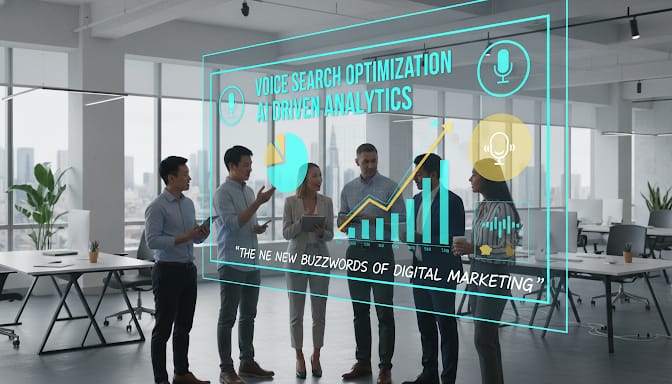
The digital marketing landscape is in constant flux, often introducing new acronyms that can leave even seasoned professionals feeling a bit lost.
As Dr.
Amit Kumar Das, I observe that the latest additions to this "digital alphabet soup"'AEO (Answer Engine Optimization) and GEO (Generative Engine Optimization)'are not just buzzwords; they represent critical shifts for brand visibility in a post-search world.
This section aims to demystify these concepts, explaining their importance for marketing professionals, brands, and agencies.
AEO, or Answer Engine Optimization, focuses on tailoring content to appear in the direct answers now prevalent above traditional search results.
This includes Google's AI Overviews and Bing's answer boxes,,.
Essentially, AEO is about optimizing your content to be the definitive, concise answer that search engines present directly to users.
It's akin to climbing the search ladder, ensuring your information is prioritized for immediate consumption.
Achieving true Keyword Authority in this new environment means not just ranking for queries, but being the source that AI chooses to quote directly for specific answers.
Conversely, GEO, or Generative Engine Optimization, addresses an even more profound evolution in how content is discovered and delivered,,,.
Generative platforms diverge from traditional search engines by not displaying a list of ranked links or highlighting a single answer box.
Instead, GEO is about training the AI itself to cite your brand or content as a trusted source.
It's about influencing the generative AI to "say your name" rather than providing a list of competitors.
This requires a sophisticated approach, moving beyond traditional SEO tactics to truly integrate with the AI's understanding and generation processes.
The distinction is crucial: AEO helps you get the "right now" answer in traditional search, while GEO positions your brand to be cited directly by generative AI.
For marketing professionals, navigating these new frontiers necessitates robust AI-Assisted Marketing strategies.
An advanced Marketing Intelligence Platform can provide the Predictive Decision Support needed to identify opportunities for both AEO and GEO, ensuring content is optimized not just for algorithms, but for the generative capabilities of AI.
Without a proactive GEO strategy, your brand risks being overlooked, as AI may cite a better-optimized competitor.
This evolving search landscape demands a comprehensive understanding and strategic implementation of both AEO and GEO to maintain and enhance digital visibility.
-Cfrk75QH.jpeg)
Unlocking Growth: How GEO and AEO Boost Your Reach
The shift from traditional search engines to AI-driven answer engines and generative platforms profoundly redefines how brands achieve visibility.
AEO, or Answer Engine Optimization, is about making your content readily available for AI-powered tools'such as Google SGE, voice assistants, and featured snippets'to directly present as answers.
This ensures your content is not just found, but actively utilized to answer user questions, representing a natural evolution of SEO itself.
Similarly, GEO, or Generative Engine Optimization, focuses on tactics to optimize content specifically for generative AI tools like ChatGPT, Gemini, Co-Pilot, and Google's new AI Mode.
Essentially, GEO serves as your brand's "passport to AI visibility," ensuring presence within these future search interfaces.
These optimization strategies are not merely incremental improvements; they are foundational for future brand discovery.
Experts predict that AI will become the primary driver of how brands are found.
Therefore, mastering AEO and GEO is crucial for any marketing professional seeking to maintain and expand reach.
By optimizing for direct answers and generative responses, brands can secure a privileged position at the forefront of user queries, effectively bypassing traditional organic search results to deliver immediate value.
This requires a sophisticated approach, often leveraging AI-Assisted Marketing tools to analyze vast datasets and identify emerging patterns in user intent.
For brands and agencies, understanding and implementing AEO and GEO means moving beyond conventional keyword ranking to building true Keyword Authority within a dynamic, AI-first environment.
It's about ensuring your content is perceived as the most authoritative and concise answer, not just a relevant search result.
This strategic foresight, which we at our AI SaaS Company consider essential for Marketing 4Sight, enables businesses to anticipate where their audience will be searching next.
It provides the Predictive Decision Support needed to adapt content strategies proactively, ensuring content is not only discoverable but also directly actionable by AI systems.
Embracing these optimizations transforms your digital presence from merely visible to truly indispensable in the evolving digital landscape.
-C5GJZFH4.jpeg)
Implementing GEO & AEO: Practical Strategies for Modern Marketers
For marketing professionals aiming to thrive in the evolving digital landscape, implementing GEO and AEO effectively requires a strategic, layered approach.
As an AI SaaS company, we understand that robust SEO foundations are paramount before advancing into these specialized strategies.
This ensures your content is already discoverable before optimizing for generative AI models and AI-generated answers.
The shift isn't about abandoning traditional SEO, but rather integrating it into a more comprehensive content strategy where traditional SEO, GEO, and AEO work in concert.
For GEO, the goal is to make your content the primary source for generative AI models like chatbots and large language models (LLMs), while AEO focuses on optimizing content to be accurately summarized in AI-generated answers.
This future-proofs your content, ensuring your brand isn't missing golden opportunities if it's not mentioned in AI conversations.
Successfully navigating this new terrain involves:
- Focusing on content quality over mere quantity: Creating value-driven, human-first content that resonates deeply.
- Rethinking how keywords function: While keywords still matter for GEO-friendly content, their role is different from traditional SEO.
- Establishing Keyword Authority: Instead of simple density, it's about providing comprehensive, well-structured information that AI can easily understand and reference.
Our AI-Assisted Marketing solutions, for instance, are designed to provide Predictive Decision Support, helping brands identify not just what topics are trending, but how to structure content to be most appealing to both human readers and generative AI.
This holistic view, often managed through a robust Marketing Intelligence Platform, allows for seamless integration of SEO, GEO, and AEO, creating a truly Connected Intelligence Ecosystem for maximum impact.
-DcyTLfKT.jpeg)
Navigating Challenges: Pitfalls and Ethics in GEO and AEO
The shift towards Generative Engine Optimization (GEO) and Answer Engine Optimization (AEO), while offering new avenues for visibility, introduces several critical challenges and ethical considerations that demand a sophisticated approach.
One of the most pressing pitfalls for brands is the escalating "zero-click" phenomenon.
While traditional Google Search sees a 34% zero-click pattern, this figure rises to 43% when an AI Overview is present, and a staggering 93% in Google's AI Mode.
For marketing professionals, this means that even if AI platforms cite or recommend a brand, direct website traffic may significantly diminish, posing a substantial threat to traditional conversion funnels.
As I, Dr.
Amit Kumar Das, have observed through our work at an AI SaaS Company, this necessitates a fundamental rethink of how we measure success and attribute value in the AI era.
Another paramount consideration lies in the ethical imperative of content credibility and authority.
The E-E-A-T framework (Expertise, Experience, Authoritativeness, Trustworthiness) is not merely good practice for traditional SEO; it is crucial for AEO and GEO to guarantee that content is deemed reliable enough for AI-generated responses.
Without strong E-E-A-T, content risks being overlooked or, worse, misrepresenting information, which carries significant ethical implications for brand reputation and user trust.
Navigating these complexities requires more than just reactive measures.
It calls for Predictive SEO strategies that anticipate AI model evolution and content needs.
Brands must also contend with the challenge of content freshness; a blog post from 2026 with new data is far more likely to be included in an AI answer than a stale 2021 article.
This demands continuous content updates and a focus on evergreen, yet timely, information.
To address these complexities, businesses need robust AI-Assisted Marketing solutions.
A comprehensive Marketing Intelligence Platform can provide the necessary Predictive Decision Support, enabling brands and agencies to understand how their content is perceived by generative AI and how to optimize for citation.
This holistic approach helps overcome the challenge of brand invisibility'the stark reality that "If AI Doesn't Mention Your Brand, You Don't Exist".
Real-World Impact: Successful Campaigns Leveraging GEO and AEO
The shift from the "ten blue links" era to one dominated by AI-powered search engines necessitates a new approach to digital visibility. Successful campaigns today are no longer solely focused on traditional SEO; they strategically integrate Answer Engine Optimization (AEO) and Generative Engine Optimization (GEO) to capture the evolving user journey.
For brands and agencies, the real-world impact of AEO and GEO is profound.
AEO campaigns, for instance, excel by optimizing content to provide the ultimate, instant response to a user's query, making it easy for AI tools like Google SGE or voice assistants to present content as direct answers,.
This ensures a brand's expertise is front and center, often in featured snippets or direct AI responses.
Concurrently, GEO strategies aim to have a brand featured in synthesized, conversational answers brought by AI, securing a prominent position in the future of search,.
This dual approach builds brand visibility even without a direct click, rewarding clarity and increasing the chances of being cited or summarized by AI tools.
As Dr.
Amit Kumar Das, I've observed that the most effective campaigns leverage advanced analytics to analyze user intent and AI behavior.
For an AI SaaS company like ours, this means providing tools that facilitate truly AI-Assisted Marketing, guiding content creation towards topics and formats most likely to be picked up by AI engines.
This strategic approach moves beyond reactive tactics to a proactive Predictive SEO framework, ensuring brands achieve genuine Marketing 4Sight by anticipating future search trends and securing visibility in the evolving landscape.
-CwDDvQEg.jpeg)
The Future is Integrated: Combining GEO and AEO for Success
As the digital landscape evolves, particularly with Google's transformation into an AI-first discovery engine powered by Large Language Models (LLMs), the distinction between traditional SEO, GEO, and AEO blurs.
For marketing professionals and the brands they serve, success in 2026 and beyond will not hinge on mastering one acronym over another, but on their seamless integration.
As Dr.
Amit Kumar Das, I contend that this integrated approach is paramount for maintaining visibility and relevance.
The future of digital marketing demands a holistic strategy where content is optimized not only for search engine algorithms but also for the direct answers provided by generative AI and the specific queries of answer engines.
This necessitates a sophisticated, AI-Assisted Marketing framework.
Such a framework allows brands to develop Predictive SEO capabilities, anticipating user intent and future search trends across both traditional and AI-driven platforms.
By understanding the nuances of how generative engines synthesize information and answer engines distill facts, brands can proactively shape their content to become the authoritative source.
Achieving this level of integration requires more than just understanding the concepts; it demands actionable intelligence.
An advanced Marketing Intelligence Platform becomes indispensable, providing Predictive Decision Support to guide content creation and distribution strategies.
This empowers brands to build robust Keyword Authority not just for individual terms, but for entire topics and answers, ensuring their presence in the new discovery ecosystem.
This proactive approach, which we might call Marketing 4Sight, ensures that brands are not merely reacting to changes but are strategically positioned at the forefront of the generative and answer-driven search revolution.