
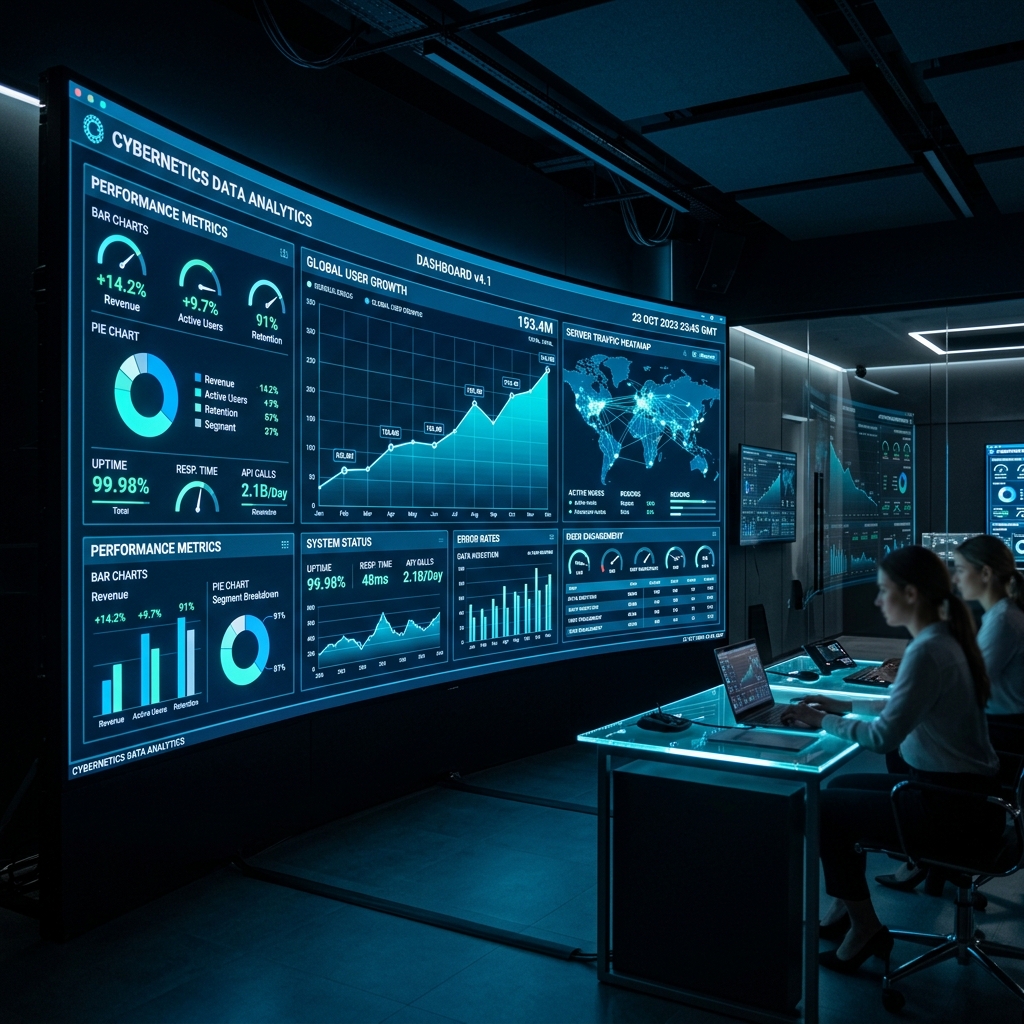
It is the last week of the month.
The SEO agency has submitted ranking reports showing positive keyword growth. The social media team highlights a 42% increase in engagement. Paid campaigns are generating clicks at a lower CPC than last quarter. Website traffic is up. Content production targets are being achieved consistently.
On paper, everything appears to be moving in the right direction. However, one question changes the situation:
'If marketing performance is improving everywhere, why is business growth still inconsistent?'
Because this is where many modern marketing operations begin to break down.
Not due to lack of effort. Not because teams are inactive. Not because tools are missing.
But because most businesses today operate with fragmented visibility while marketing itself has become deeply interconnected.
Teams optimize channels. Businesses need optimization across outcomes. And the difference between those two is exactly where Data-Driven Decision Making starts becoming operationally important.
Modern Marketing Produces Massive Activity But Limited Clarity
-D-QYoqkZ.jpeg)
The average marketing team today operates across:
According to research from HubSpot, marketers today use an average of 10 or more tools to manage marketing operations.
Now imagine what happens operationally inside that environment.
The SEO team identifies ranking opportunities.
Content teams work on publishing velocity.
Paid teams focus on acquisition costs.
Social media teams optimize engagement.
Leadership focuses on revenue impact.
Everyone is optimizing something. But often, nobody has complete visibility into how all these signals connect together. This creates one of the biggest operational risks in marketing:
Teams become data-rich but decision-poor.
What Data-Backed Decision Making Actually Means
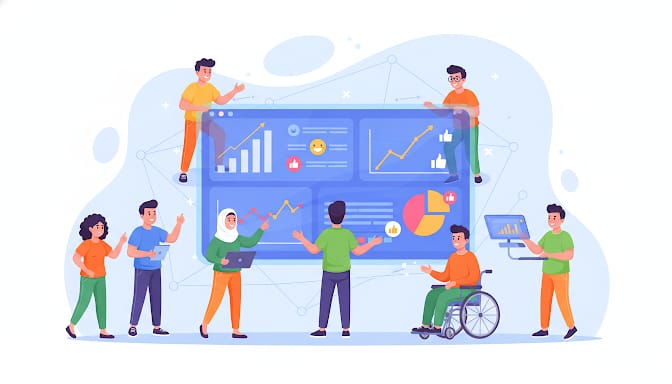
Many businesses assume Data-Driven Decision Making simply means 'using reports.' It is much deeper than that. Data-backed decision making means using connected operational intelligence to decide:
- where marketing attention should move,
- which channels deserve investment,
- what should be optimized first,
- which activities are driving business impact,
- and how priorities should evolve based on live performance signals.
The key word here is connected. Because isolated metrics rarely improve performance on their own.
For example:
A 70% increase in website traffic sounds positive. But if conversion rates decline, bounce rates rise, and high-intent pages lose engagement, then traffic growth alone becomes a misleading success metric.
Similarly:
Social engagement may increase, content output may grow, rankings may improve, but if the business cannot connect those activities to visibility quality, audience intent, and conversion movement, optimization decisions remain incomplete.
This is why connected intelligence matters more than isolated reporting.
A Situation Almost Every Marketing Team Has Experienced
-CKh4Rc1Y.jpeg)
Consider a fast-growing education brand preparing admissions campaigns for the upcoming quarter.
The business invests heavily across SEO, blogs, Instagram reels, YouTube videos, paid ads, landing pages, and local search visibility.
Over 90 days:
- organic traffic increases by 38%,
- Instagram engagement doubles,
- paid campaigns generate higher CTR,
- website sessions improve significantly.
But admission inquiries increase by only 6%.
Now leadership wants answers. The SEO team says rankings improved. Paid teams say campaigns performed efficiently. Social teams say engagement is rising. Content teams delivered everything planned.
Everyone worked. Yet optimization clarity still feels weak.
Why? Because the business lacks connected operational visibility.
Nobody can clearly identify:
- which channels are driving high-intent users,
- where users are dropping off,
- which content themes influence conversions,
- whether local search visibility impacts inquiries,
- or how audience behavior changes across touchpoints.
This is where data-backed operational systems fundamentally change marketing performance. Because optimization improves dramatically when businesses stop looking at channels individually and start analyzing marketing as one connected ecosystem.
How Data-Backed Decisions Improve Marketing Performance
--OmBQ6NN.jpeg)
1. They Help Businesses Prioritize Faster
One of the biggest hidden problems in marketing is prioritization fatigue.
Most teams constantly ask:
- What should we focus on next?
- Which channel needs attention?
- Which activity matters most?
- Which optimization will create business impact?
Without connected intelligence, prioritization often becomes reactive.
For example: rankings drop, then SEO becomes urgent. Engagement falls, then social strategy changes. Leads decline, then campaigns get revised.
But connected operational visibility allows businesses to identify movement earlier. Instead of reacting after performance declines, businesses can identify slowing engagement trends, declining keyword momentum, rising competitor visibility, weakening landing page performance, or conversion bottlenecks before they create larger business impact. That speed significantly improves optimization efficiency.
2. They Reduce Decision Delays Across Teams
One of the biggest operational costs inside marketing teams is not campaign spend. It is decision delay.
In many organizations data sits across multiple dashboards, reports require manual compilation, teams interpret metrics differently, and leadership receives fragmented visibility.
As a result, businesses spend more time understanding the problem than solving it. This is exactly why connected marketing intelligence systems are becoming important.
When performance visibility, execution tracking, audience movement, and optimization signals exist within one operational layer, businesses reduce dependency on manual reporting, spreadsheet coordination, and disconnected reviews.
The result is faster operational responsiveness. And in modern marketing environments, faster responsiveness often directly impacts performance outcomes.
3. They Improve Budget Allocation
Data-backed decision systems help businesses stop treating all channels equally.
For example: A SaaS company may discover LinkedIn generates lower traffic but significantly higher lead quality, SEO blogs contribute strongly to assisted conversions, branded search traffic converts 4x better than display traffic, and certain landing pages create higher retention despite lower visits.
These insights change budget decisions completely.
Instead of increasing spend everywhere, businesses begin optimizing investment based on actual operational impact.
According to Google's research on high-performing marketing organizations, businesses using integrated data visibility and connected measurement frameworks are significantly more likely to improve marketing ROI compared to organizations operating with fragmented reporting systems. Because optimization quality improves when visibility improves.
Why Marketing Performance Is Now a Visibility Problem
Many businesses still think marketing performance problems are execution problems. Often, they are visibility problems first. Because businesses cannot optimize what they cannot clearly see.
This becomes especially visible during scaling phases, multi-channel campaigns, regional expansion, seasonal marketing, or competitive market shifts.
For example: A business may notice website traffic improving, but local discoverability weakening. Campaign engagement rising, but conversion quality declining. Rankings increasing, but competitor content overtaking commercial-intent keywords.
Without connected visibility, these signals remain isolated. And isolated visibility leads to fragmented optimization.
The Role of AI in Data-Driven Marketing Operations
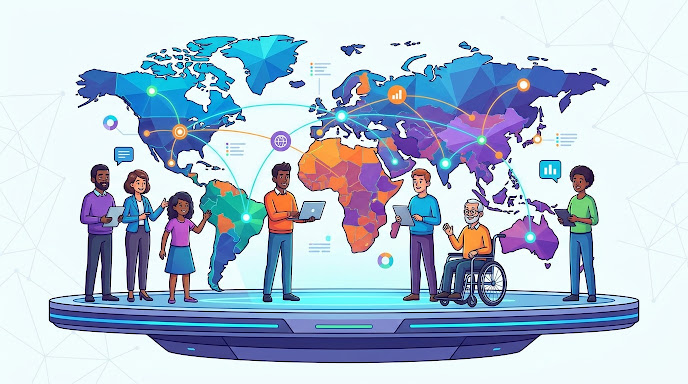
Modern marketing environments generate too much operational movement for manual analysis alone.
Every day rankings shift, competitors publish new content, audience behavior changes, engagement trends evolve, campaigns fluctuate, and search intent moves continuously.
This is where AI-assisted operational systems are becoming increasingly important. Not because AI replaces marketers. But because it helps businesses process operational intelligence faster.
AI-assisted systems can help surface performance anomalies, emerging opportunities, optimization gaps, competitor movement, audience shifts, and operational priorities without requiring teams to manually interpret fragmented environments constantly. Combined with connected intelligence environments, this creates far more adaptive marketing systems.
Why Connected Intelligence Is Becoming a Competitive Advantage
The businesses growing fastest today are not necessarily the ones running the most campaigns. Often, they are the ones operating with:
- stronger visibility,
- faster decision cycles,
- connected intelligence,
- and clearer operational alignment.
Because modern marketing performance is increasingly driven by how quickly businesses identify movement, how effectively teams align priorities, and how continuously organizations adapt optimization direction.
This is exactly why operationally connected marketing systems are becoming central to modern growth strategies.
Platforms like Marketing 4Sight are built around this shift ' helping businesses connect strategy, execution, governance, optimization, visibility, and intelligence within one continuously informed operational environment.
Conclusion
Data alone does not optimize marketing performance. Connected decision-making does.
Modern marketing environments move too quickly for fragmented reporting, isolated optimization, and delayed visibility cycles.
Businesses today need systems capable of continuously connecting performance signals, audience movement, operational workflows, competitive intelligence, and execution visibility into one environment where decisions become faster, clearer, and more adaptive.
Because ultimately, marketing performance improves when businesses stop operating through disconnected activities and start operating through connected intelligence.